Saturday, October 11, 2008

Profondo rosso (Dario Argento, 1975) aka Deep Red


Deep Red (Dario Argento, 1975)
Rating: 7.7

Deep Red is much more interestingly shot and edited than Suspiria and has some substance behind it too, although Argento's direction is superior to the writing.


Suspiria (Dario Argento, 1977)


Suspiria (Dario Argento, 1977)
Rating: 4.0

Tacky unrealistic lighting, bad acting, characters I don't care about, and a plot that doesn't make a whole lot of sense. The best part about the film is the soundtrack by The Goblins. Not so sure why this is considered such a classic in horror, although the genre is pretty dense I suppose. I can't even begin to fathom the remake in 2010 that will star Natalie Portman and be directed by David-Gordon Green...seriously what the fuck?


Friday, October 10, 2008

Voskhozhdeniye (Larisa Shepitko, 1977) aka The Ascent


The Ascent (Larisa Shepitko, 1977)
Rating: 9.5


"Barely two years after her greatest international triumph—winning the Golden Bear at the Berlin Film Festival for The Ascent—Ukrainian filmmaker Larisa Shepitko tragically died in an automobile accident. The Soviet cinema thus prematurely lost one of the major talents of its post-war generation, and the international film community was robbed of one of its emerging—and potentially most significant—creative lights."
—Rob Edelman

The Ascent
begins as a seemingly typical Eastern European film dealing with the hardships of war and the Soviet's struggle against the Nazis. It is comparable to the work of the other great Soviet masters, Tarkovsky, Parajanov, Eisenstein, Chukhrai, and Kalatozov, with it's unique compositions, brilliant cinematography, and beautiful snow covered woodland landscapes. I recall several surreal shots where the camera panned through tree-lines and another dream-like shot of a character surrounded by the pure white snow as if on a blank canvas. The plot centers around two soldiers, isolated from their squadron, who try to avoid, but are eventually captured by Nazis. For the most part the film is shot with a lot of very tight shots and close ups. The occasional wide shots capture how completely alone the men are; prisoners to their environment. Throughout the film both men are haunted by the thought of death, however their philosophies differ. Sotnikov prepares to shoot himself rather than be taken captive by the German soldiers, before he is rescued by Rybalk. Following this sequence Sotnikov remarks that he doesn't necessarily fear death, but rather the thought of dying alone in an open field like a dog, although it is a matter of getting used to the thought. Rybalk on the other hand, intends to survive at all costs, and daydreams about attempting to escape captivity only to be shot down. It becomes both a study of the human conscience as well as an overt transcendental Christian allegory, when Sotnikov offers to confess and take the blame in order to save the lives of the other four prisoners, which include an older gentleman, a young girl, and a mother of three children. Conversely Rybalk, takes on the role of Judas and the prisoners make their final ascent up a steep hill where their fate awaits.


Wednesday, October 08, 2008

Young Frankenstein (Mel Brooks, 1974)


Young Frankenstein (Mel Brooks, 1974)
Rating: 9.0

Gene Wilder is so awesome...what a great voice.

This film is obviously a comic classic and especially great to watch this time of year.

Sunday, October 05, 2008

Il Buono, il brutto, il cattivo (Sergio Leone, 1966) aka The Good, The Bad, and The Ugly


The Good, The Bad, and The Ugly (Sergio Leone, 1966)
Rating: 8.2

The art design and photography are both fantastic in this prequel that completes Leone's "The Man With No Name" Spaghetti Western Trilogy. The civil war battle scenes looked great and the massive cemetery is just epic. It seems Leone perfected his romantic stylization of the Western genre a little more with each film. I am pretty meh on the script as a whole, but it has it's moments and was more engaging than the first film of the trilogy. The final showdown is a poetic exercise in pacing, editing, and suspense, and certainly is worthy of the legendary hype.


Per qualche dollaro in più (Sergio Leone, 1965) aka For a Few More Dollars


For a Few More Dollars (Sergio Leone, 1965)
Rating: 8.6

For a Few More Dollars, like it's prequel opens with a tacky and dated title sequence. Ennio Morricone's score was hit and miss for me. It is great in some scenes, but a bit frivolous and detrimental in others. Overall,I found the film much more interesting in terms of both plot and aesthetics than A Fistful of Dollars, and it's always funny to see Klaus Kinski in a minor acting roll with a ridiculous voice dub, especially considering his ego.


Per un pugno di dollari (Sergio Leone, 1964) aka A Fistful of Dollars


A Fistful of Dollars (Sergio Leone, 1964)
Rating: 6.6

I had high expectations for this, but I ended finding this pretty mediocre. I liked Yojimbo a lot more, and it's not even one of my favorite Kurosawa films.


Wednesday, October 01, 2008

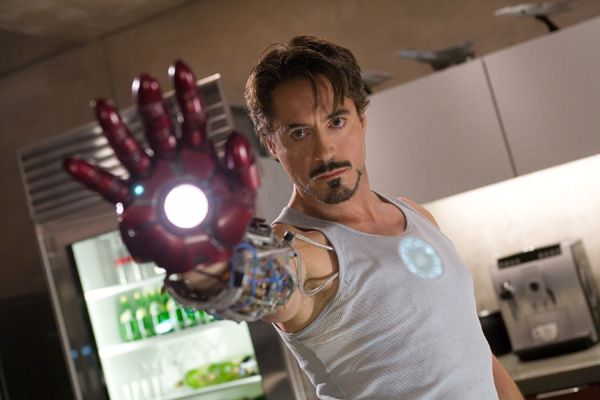
Iron Man (Jon Favreau, 2008)


Iron Man (Jon Favreau, 2008)
Rating: 4.7

I watched this to bond with my new roommates, and it was pretty much exactly what I expected it would be. The build up was too long, the plot points were all too familiar and predictable, overdone score, over written dialogue, pretty dull climax, cliché after cliché...yada yada yada...


Tuesday, September 30, 2008

Trafic (1971, Jacques Tati)


Trafic (1971, Jacques Tati)
Rating: 7.5

Mr. Hulot seems even more out of place in the increasingly mechanical surroundings of the modern world. My biggest problem with Trafic is that we seem more disconnected from our protagonist than usual as he just seems to be wandering around haphazardly. The gags aren't really as clever or elaborate here either. MY favorite parts were the montages of people in their cars pikcing their noses or yawning, ect.