Sunday, February 26, 2006

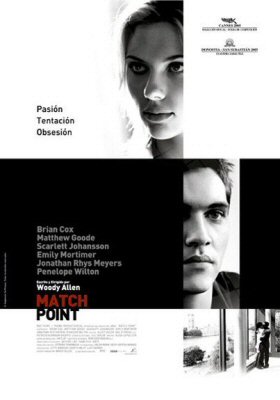
Match Point (Woody Allen, 2005)


Match Point (Woody Allen, 2005)
Rating: 7.7

Four Meanings of a film Assignment:

1. Fabula: Former Tennis Pro, Chris Wilton (Jonathan Rhys Meyers) befriends Tom Hewett (Matthew Goode) and immediately is embraced by the well-off British upper-class Hewett family. Tom’s sister Chloe (Emily Mortimer) falls in love with Chris and they eventually marry. Temptation interferes, as Chris has always been infatuated with Tom’s ex-fiancée Nola (Scarlett Johansson) and he begins playing a dangerous, game trying to juggle relationships with two women at once.

2. Explicit Meaning: Being lucky in life can ultimately hold more importance than hard work and talent, and can possibly cancel out morals. Throughout the film we are reminded of how an instance of luck can be the difference between success and failure. Anecdotes in the beginning with the ball paused in mid-air and the voice-over narration as well as Chris’s outlook on luck that he expresses in the film reemphasize this point. Towards the end of the film a ring is paused in mid-air similar to how the tennis ball was in the beginning, and in this sequence the difference between ruining and maintaining Chris’s life is determined. For him things turn out fine, but unfortunately Nola, a women who seems to have always had a difficult life, is unlucky for a final time.

3. Implicit Meaning: Life is a game. There are winners and losers. Sometimes the wealthier teams or the luckier players come out ahead, but it isn’t always something easily controlled by the individual. Other times the competitor must take control, and be aggressive. Sometimes the most ruthless competitor who can shrug off guilt will come out of top. The best competitors must be able to overcome obstacles, passion, obsession, etc. at all costs to accomplish what they’ve set out to do.

4. Symptomatic Meaning: Wealth, power, and comfort actually do amount to happiness. Both the characters of Chris and Nola are trying to escape their unsuccessful pasts and indulge in a life of luxury and elegance. In one scene we see Chris reading “Crime and Punishment”, which the film seemingly parallels, but it appears he opts to read an abbreviated summary instead. He wins the favor of the Hewett family and his ascent into high society is shown throughout, as we see him engaging in operas, art galleries, getting a job promotion, etc. Nola on the other hand is cast out from the Hewett family. Despite his passionate obsession with Nola, in the end he decides to kill her rather than sacrifice his upper-class future. Following the crime, it is almost as if Chris hides his guilt behind his class status. He disguises the murder as a petty drug theft and when confronted by the detectives he begs them to consider his and his father-in-law’s positions in the community. In the end the murders are pinned on another drug related criminal with previous offenses who coincidentally finds the ring Chris disposed of.

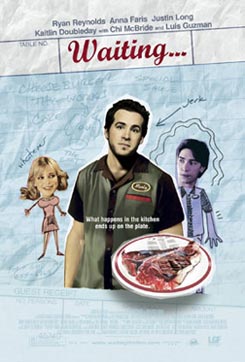
Waiting... (Rob McKittrick, 2005)


Waiting... (Rob McKittrick, 2005)
Rating: 5.5

This is a typical grossout teen/young adult film. Nothing extremely interesting or unique here, but I have to say I enjoy Ryan Reynold's strangely effeminate line deliveries. I remember laughing a few times, but it's hard to recall what I was laughing at. That being said it's safe to say there isn't really anything memorable enough worth mentioning. Although there was one notable scene where the camera hovers around the restaurant from table to table in one long take and the spectator becomes privy to the patrons private conversations.

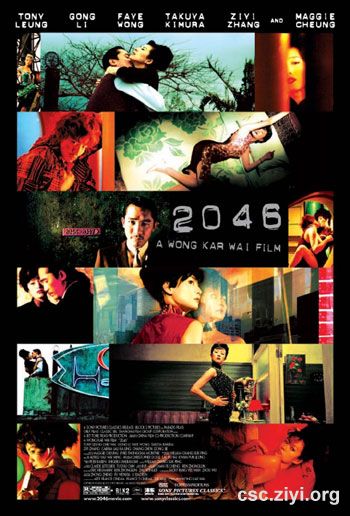
2046 (Kar Wai Wong, 2004)


2046 (Kar Wai Wong, 2004)
Rating: 8.3

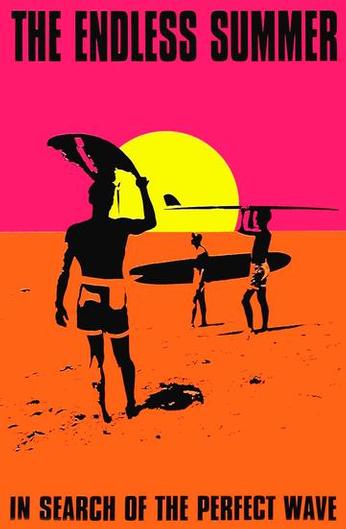
The Endless Summer (Bruce, Brown, 1966)


The Endless Summer (Bruce, Brown, 1966)
Rating: 6.4

This surf documentary came out in the 60s during the height of surf culture's popularity in the United States. The film although ideally simplistic explores themes such as comsumerism, Peter Pan Syndrome and the celebration of youth, freedom of choice, sense of community, and colonialism all while maintaining a fun and comedic approach. The filmmaker Bruce Brown follows 2 fellow surfers around the world as they search for the "perfect wave." Personally I can only watch surfing for so long before it becomes tiresome and the gags and voice-over narration jokes are pretty adolescent and cheesey. But there are several interesting aspects such as watching the African natives witness surfing for the first time and trying it out for themselves.

The Night of the Hunter (Charles Laughton, 1955)


The Night of the Hunter (Charles Laughton, 1955)
Rating: 8.7

An incredible script by James Agee reads like an Appalachian folk-tale, telling the suspensful story of a criminal posing as a preacher (Robert Mitchum in his finest role) terrorizing two children who know the where about of the stolen money he pursues. Narratively, "Night of the Hunter" is an under-appreciated classic, considering the number of films and stories influenced by it. As I watched I realized David Gordon Green's "Undertow" (2004) is basically a modern remake that substitutes characters and their relations just enough to pass it off as being an original work. The directing and editing is flawed at times, but the cinematography by Stanley Cortez is very impressive. Although on the surface, this film seems like a simple tale of good vs. evil, there are a lot of things going on here and the ending is especially moving.

Glory Road (James Gartner, 2006)


Glory Road (James Gartner, 2006)
Rating: 3.7

Representative Anecdote assignment:

It’s the day before the National Championship basketball game, and as you would come to expect from any typical sports movie, the time has come for the coach to deliver the definitive motivational speech. The Texas Western basketball team sits in the stands of an empty arena, seven black players, and four white, while their coach, Don Haskins (Josh Lucas) starts spouting racial epithets and discriminatory reasons why a team with so many African American players has no chance at winning a championship game. Despite the fact their coach has shown them nothing but respect and confidence in their abilities all season, this obvious satirical speech confuses the players and we see them grow angry until Haskins reveals “he’s sick of hearing people say these things.” Next, Haskins tells his team he intends to “shut everyone up” by only playing the black players in the final game. A white player interjects speaking on behalf of the other white players saying it’s not fair to them, because they earned it just as much and they want to play just as much as anyone else. On the other hand he concedes to the fact that the black players have had to deal with far worse unfair treatment throughout history and if that’s what needs to be done to stop the racism in sports then they’ll do their part to help. But in this poignant cliché filled scene, the sentiments of the coach, the players, and the spectators are summed up while also conveying the fact that this is about a whole lot more than just a game of basketball. It is debatable whether or not the real Don Haskins actually made this speech to his players or whether it’s all just a bunch of Hollywood hype. Despite the good intentions of this film, this scene is an excellent example of how it, in some ways, reinforces racism in sports by segregating players based on skin color rather than treating them as equals and playing the five most talented player regardless of color.

The Birds (Alfred Hitchcock, 1963)


The Birds (Alfred Hitchcock, 1963)
Rating: 4.7

I'm going to be honest, I have only seen three Hitchcock films, and feel underqualified to criticize a man who is considered a genius by many. Maybe it's because I've grown up in a time where audiences have become desensitized to violence, suspense, and horror films. To me the entire concept of birds attacking and killing humans belongs in a straight to video release. The dated effects and situations in general are mostly laughable although during their time I'm sure these effects were spectacular. I suppose most of the flaws I found in this film aren't necessarily his fault, but perhaps that of a pathetic script. The dialogue seemed to forced as ridiculously over dramatic characters shared unprovoked backstories with each other, and a romance between Melanie Daniels (Tippi Hedren) and Mitch Brenner (Rod Taylor) seemingly blossoms out of nowhere, almost as if an entire scene is missing. On a more positive note, the sounds effects were great and I found myself enigmatically attracted to Tippi. I didn't find her to be overly beautiful or even a great actress, but something about her voice and the way she delivered lines perked my interest. I'm going to go ahead and call this film overrated at this point, but I'm probably wrong. Pfffft.

Thursday, February 16, 2006

Vera Drake (Mike Leigh, 2004)


Vera Drake (Mike Leigh, 2004)
Rating: 7.0

Vera Drake is a bold social realist film that takes place in 1950s England. Leigh asserts his pro choice views by victimizing a lovable "super mother." Vera (Imelda Staunton) looks after her sick elderly mother as well as her husband and two children. What her family doesn't know is she also assists women have miscarriages. I found the film to be very educational as it explores many aspects and situations of abortion including an upper class woman who is raped and can afford to have a legalized abortion, as well as black market abortions involving lower class families with little money. Despite the pro choice stance the film takes, we also see several characters who take the opposite outlook on the subject to balance things out. Imelda Staunton was nominated for an Academy Award in 2005 for her depiction of the pro choice pioneer, Vera Drake. Mike Leigh also recieved nominations from the Academy for Best Achievement in Directing, as well as Best Writing, Screenplay Written Directly for the Screen.

Monday, February 13, 2006

Layer Cake (Matthew Vaughn, 2004)


Layer Cake (Matthew Vaughn, 2004)
Rating: 5.0

This crime film from the UK doesn't really bring anything new to the table including an outdated soundtrack that drastically contrasts with the sleak modern sets. The story itself is entertaining enough to keep the average viewer interested throughout by including drug trade, double crossing, flashy effects, and at times scenes of shocking violence much in the tradition of Tarantino or blaxploitation films. More often then not, the flashy effects are used to awe the audience rather than to convey any real meaning. But while I'm on the subject of "flashy," if nothing else the film does reward the viewer with a consolation glance at a topless Sienna Miller. I did however find the lively camera-work to be impressive and thought it was overall very well composed.

Tuesday, February 07, 2006

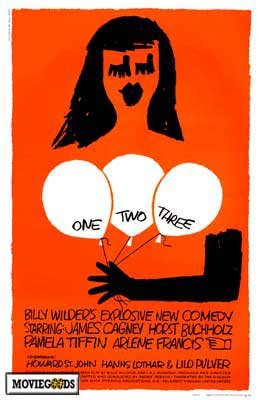
One, Two, Three (Billy Wilder, 1961)


One, Two, Three (Billy Wilder, 1961)
Rating: 8.5

This film is based on a French theatrical farce and was adapted by Billy Wilder and I.A.L. Diamond. The film portrays an American executive for the Coca-Cola named C.R. MacNamara (James Cagney)who is stationed in West Berlin during the Cold War. Seeing as it is a farce, everyone in the film is an exaggerated caricature representing capitalism, communism, fascism, Americans, Southerners, Yankees, Soviets, Germans, etc. MacNamara is given the responsibility of looking after his boss's 17 year old, bourgeois, boy-crazy, daughter who ends up marrying a communist from East Berlin. The story takes off from there as a wacky frenzy of events begin to unfold. The jokes and dialogue, and sometimes obscure references are incredibly fast paced and sometimes hard to catch, but nonetheless hilarious. Sarcasm, satire, one-liners, and topical humor are prevalent and the script really carries the film along with a colorful cast of characters. This film isn't for everyone. In such an absurd farce as this, the viewer will be asked to suspend their disbelief; and perhaps some cultural background knowledge of the time period would be helpful before viewing, but if you have any sort of sense of humor this is a very entertaining film.

Wednesday, February 01, 2006

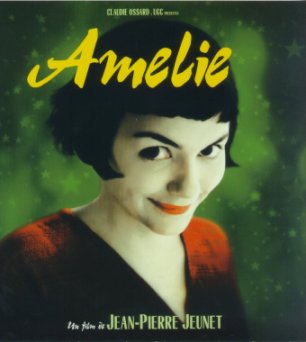
Fabuleux destin d'Amélie Poulain, Le (Jean-Pierre Jeunet, 2001)


Amélie (Jean-Pierre Jeunet, 2001, International: English Title)
Rating: 9.7

I own this film and have seen it numerous times, but I was recently asked to watch it again and write a brief response paper for a class so I figured I'd post it here:


Amélie, directed by Jean-Pierre Jeunet is an imaginative film full of life and energy. There are no major obstacles to overcome, nor are there any extravagant action sequences. In fact a brief synopsis of the film may make it sound dull and uneventful, yet it is as kinetic as any other. Amélie is a young introverted dreamer, who becomes obsessed with helping others around her find small pieces of happiness in there otherwise mundane lives and falls in love in the process. The film is accompanied by flashbacks of her childhood, as well as her internal imaginative thoughts of fantasy involving special effects and sometimes stock footage. Jeunet incorporates several different techniques throughout the film including the handheld home movie-like intro of Amélie as a child, computer animation, third person voice-over narration, and Amélie herself talking to the camera and interacting with the audience in some instances. The film often seems purposely showy, with a beautiful score, brilliant camera work and cinematography. There is constant camera movement, whether it be the fast paced cutting, hovering overhead shots, zoom-ins, sped up action, spinning shots, or the more common pans and tilts. The film is visually stunning, filled with vibrant greens and reds, and is truly a cinema of attraction for the viewer.
Amélie is an interconnecting maze of destiny or random coincidences depending on how you interpret it. Jeunet keeps the audience involved in the story through entertaining and often humorous plot lines of eccentric characters, a mystery character to peak our interest, and unveiling more personal insights into the lives of certain characters as the film moves along. Sometimes the narrator reveals things we would otherwise never know, or they are revealed through brief vignettes. It is almost as if we are voyeurs into the characters lives much like Amélie herself as she interferes into the lives of others. We also witness scenes of other characters prying into the lives of others. For instance the painter looks into Amélie’s apartment, Nino collects discarded photos of strangers, and Joseph is always spying on his ex-girlfriend in the café. There are a lot of things going on in this film, and it’s hard to choose one distinct underlying meaning, but I think the most important thing the filmmakers want to convey, as cheesey as it sounds, is that you can’t let events from your past allow you to miss out of the simple enjoyments that await each of us in life. Amélie trys to fill the small voids in the lives of the people and bring joy to them, but just as they are missing something in their lives, so is she. With the encouragement of Raymond Dufayel along with the help of fate, she falls in love and doesn’t let the opportunity pass her by. This spectacle of a film is always a delight to watch and rewards repeated viewing and recommend it to all film enthusiasts.

Monday, January 30, 2006

Prozac Nation (Erik Skjoldbjærg, 2001)


Prozac Nation (Erik Skjoldbjærg, 2001)
Rating: 1.5

This film was based on the life of Elizabeth Wurtzel as documented in her book of the same title. It was actually never released in theaters due to the unlikeable nature of the central heroine, and the fact that Wurtzel herself hated the movie, among other reasons. It actually made debuted on the Starz! network in 2005. After watching this film I can see why Mirimax films shelved it indefinitely. Christina Ricci plays a young aspiring writer who battles depression. The film wreaks of stereotypes and cliché characters including an overly emotional mother (Jessica Lang), a deadbeat dad who suddenly reemerges, the sweet boyfriend (Jason Biggs), the understanding friend (Michelle Williams), and hip young doctor (Anne Heche). I also found the voice-over narration to be shallow and unoriginal, considering the main character is supposed to be a brilliant writer. The dialogue often seemed trite and forced at times. It seems "Prozac Nation" attempts to keep our attention by use of either flashy camera effects, or gratuitious scenes and/or references involving sex, drugs, and rock n' roll. In one scene we see Ricci sitting on her bed completely nude for no apparent reason. What was even more disappointing was when it's all said and done, the film doesn't take a strong stand either way on whether antidepressants are positive or negative.

Sunday, January 29, 2006

Twist (Ron Mann, 1992)


Twist (Ron Mann, 1992)
Rating: 4.5

This is another documentary from award winning filmmaker Ron Mann. ("Grass") It explores the evolution of dancing from the conservative ballroom style to the freestyle form that took place in the early 60s and the years leading up to it. As the title suggests, much of the film focuses on the phenomenon the song "The Twist", originally written and peformed by Hank Ballard and the Midnighters, and then covered and popularized by Chubby Checker, created. As I was watching the stock footage of young teenagers dancing I thought to myself why make a documentary about such a frivolous topic, but soon I found the film raising some profound points. The interviews with former American Bandstand dancers, and performers such as Hank Ballard, Chubby Checker, Joey Dee, and others revealed a lot about mainstream trends and American pop culture in general. Topics such as the plagarism of African American dances and music, the ridiculousness of companies trying to market anything and everything involving the word "twist" as well as other absurd dances similar in nature, and the free spirited individualism that began to evolve during this period. The problem I found with this film was it only briefly touches on the more meaningful subjects, while being more concerned with repetitive footage of different trendy dances.

Tuesday, January 24, 2006

In the Mood for Love (Kar Wai Wong, 2000)


In the Mood for Love (Kar Wai Wong, 2000)
Rating: 10

This is the first film I have seen from Kar Wai Wong, despite the fact that I took an Asian film class last semester. The text, my professor, scholars, and critics alike gave him much praise, but we tended to watch less accessible films in the class, in hopes that we would be inspired to watch the more popular Asian films on our own. After viewing "In the Mood for Love" I have to concede that writer, director, producer, Kar Wai Wong lived up to all the hype. The story is simple, but intricately told through Wong's unconventional style consisting of elliptical editing techniques, and unique composition. The audiences view is often obstructed by objects in the foreground, or blocked by doorways and cramped spacing, lending an element of entrapment. Wong also prevents the audience from participating in the story with many third person observer shots rather than first person point of view shots. For example there are several times in the film when we can hear the spouses of the two main characters talking, but we never see their faces on screen. The two main characters played by Tong Leung and Maggie Cheung are neighbors who form a bond with each other after discovering that their spouses are being unfaithful. This emotional film was masterfully constructed, beautifully scored, and the acting by both Leung and Cheung is magnificent. I look forward to watching the follow-up film "2046" and seeing more from Kar Wai Wong in the future.

Monday, January 16, 2006

Mysterious Skin (Gregg Araki, 2004)


Mysterious Skin (Gregg Araki, 2004)
Rating: 6.2

This film is centered around the stories of two boys from Kansas, who are molested by their little league coach. It is an interesting look at the long term effects of sexual abuse on young children. "Mysterious Skin" grabs your attention early with amazing visual imagery and cinematography along with a stunning 'shoegazer' soundtrack. There are numerous homosexual scenes throughout. Some of which are very disturbing and I wouldn't recommend this film to someone who is uneasy about this sort of material. At times I found some of the dialogue to sound too melodramatic for a film trying to convey such a gritty and realistic look at life, and some of the character's accents annoyed me since I am from Kansas myself and they didn't quite match up. But aside from these minor faults, Joseph Gordon-Levitt delivers an outstanding performance in a difficult role as Neil McCormick, who becomes a gay hustler, while his co-star, Brian Lackey played by Brady Corbet instead represses his memories and insists he was abducted by aliens. There were several excellent supporting performances in the film as well, especially from Elisabeth Shue as Neil's mother and also from Mary Lynn Rajskub as Avalyn, a UFO obsessed friend of Brians.

Thursday, January 12, 2006

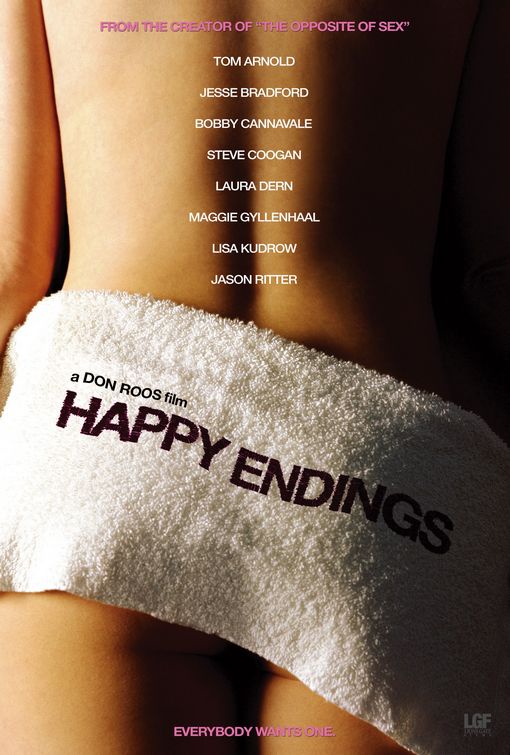
Happy Endings (Don Roos, 2005)


Happy Endings (Don Roos, 2005)
Rating: 5.6

Much along the same lines as several other ensemble cast films such as Robert Altman's "Short Cuts", P.T. Anderson's "Magnolia", and more recently Paul Haggis's "Crash", "Happy Endings" weaves several different characters and their plotlines throughout the narrative and loosely connects them in some way or another. The cast includes Lisa Kudrow, Steven Coogan, Tom Arnold, Maggie Gyllenhaal, Jason Ritter, and others. Although these types of films are starting to become cliché, "Happy Endings" still maintains a sense of freshness with it's subtle blend of dark humor and more serious life issues such as sexuality, abortion, artificial insemination, and illegal immigration and is ultimately entertaining.

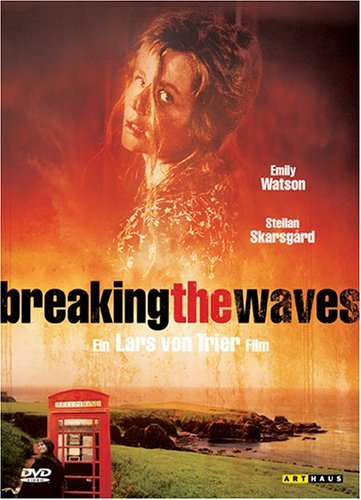
Breaking the Waves (Lars von Trier, 1996)


Breaking the Waves (Lars von Trier, 1996)
Rating: 8.2

Emily Watson delivers an extraordinary performance as Bess in her screen debut which earned her an Oscar nomination for Best Actress in a Leading Role. Several other great acting performances are note worthy in this film as well. The film explores an interesting theme of faith, spirituality, and allegiance to God in a very original manner and employs several of the Dogme 95 film techniques consisting of hand-held camera use, lack of artificial lighting, frequent use of close-ups as opposed to the more orthodox establishing master shots, etc. This film was made before the Dogme manifesto was written, and is sort of an experimental hybrid. The film does require patience, as it is rather slow and lengthy, but is visually stunning. The photography throughout the film is amazing. My favorite moments are the transition shots between chapters when title screens are juxtaposed with beautiful scenery of the scottish country side and 1970s rock n' roll music.

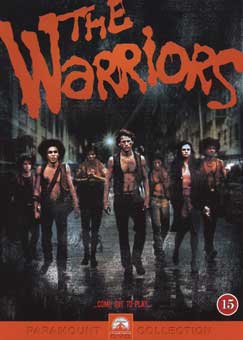
The Warriors (Walter Hill, 1979)


The Warriors (Walter Hill, 1979)
Rating: 7.1

Although it is easily construed as corny, the campiness, outdated hair styles, costuming, music, and slang is what makes this film a cult classic. There really isn't much to the story. The acting is subpar, the fight scenes are neither believable nor well choreographed, and we've all seen these familiar scenarios in films before. But despite all of it's shortcomings, this film provides fun and entertainment, memorable characters, quotable lines, and imagery that has stood the test of time for 25 years. The newly released directors cut includes transitions with scenes beginning and ending as illustrations from a comic book, which I happened to like, while others criticize the change. Yes, the film is cheesey, but who says cheesiness is always negative?

Central do Brasil (Walter Salles, Brazil, 1998)


Central do Brasil (Walter Salles, Brazil, 1998) aka Central Station (USA)
Rating: 7.4

Nominated for 2 Oscars, Fernanda Montenegro for Best Actress in a Leading Role and for Best Foreign Language Film in 1999, this film showcases the directing talents of Walter Salles ("The Motorcycle Diaries")and the acting ability of Montenegro. It is accompanied by a moving musical score by Jacques Morelembaum and Antonio Pintoas as well as beautiful cinematography by Walter Carvalho that allows us a admire the Brazilian landscape. The plot revolves around Josué (Vinícius de Oliveira), a young boy whose mother has recently died in an accident and is in search of his father and Dora(Montenegro), an old cynical school teacher, who is left with no choice, but to help the boy. The story itself is a bit sappy and predictable. yet it is still a touching film without being overly sentimental.

Buffalo '66 ( Vincent Gallo, 1998)


Buffalo '66 ( Vincent Gallo, 1998)
Rating: 7.7

I was first introduced to Vincent Gallo, as a filmmaker when I watched the notoriously atrocious The Brown Bunny. So I was skeptical about this film, but impressed after watching it and honestly amazed that such a well done film, was written and directed by the same person as The Brown Bunny. Vincent Gallo and Christina Ricci are excellent as the neurotic Billy and Layla and I especially enjoyed the portrayal of Billy's eccentric parents played by Ben Gazzara and Anjelica Huston. Buffalo '66 is a fine technical achievement in filmmaking as well. There is an amazing three-dimensional freeze scene towards the end of the movie where the camera pans around the still characters. I also found the overlaying flashback scenes to be a nice touch. This film is oddly depressing yet humorous at the same time and very original both narratively and stylistically.